SKM Update – The When to Sell Conundrum

SKM egg products was recommended at Rs 12/share and currently trades at Rs 52/share. The stock is hitting the upper circuit on a daily basis. For all those who had bought the stock at substantially lower valuations, the question of selling will be foremost on your minds. At Rs 52/share, the company trades for a market cap of Rs 130 Crs. Assuming that the company is able to make revenues of Rs 270 Crs with 5-8% PAT margins (Rs 13 Crs – Rs 21 Crs), this would bring our forward P/E anywhere between 6-10 x (a pretty large range to work with).

The question of selling, for a company like SKM with excellent long term prospects is really about whether you have any other better investment options. The stock may go lower from here (or higher, who knows?) and may cause heartburn. Or you can sell assuming that the stock has peaked. But if it goes to Rs 100 from here, then again you will have heartburn. It is up to the investor to decide his/her future course of action.

Disclosure: I plan to hold this company for the long term. I am impressed by the company, management and its growth prospects and I see no reason why the stock needs to be sold. Remember, some of the Pokaran Money manager`s picks that are tiny and small cap today, may turn into the large caps of tomorrow. Happy Investing!

Engineers India Ltd – The Hidden Ratna

Started in 1965 as a joint venture between GOI (Govt of India) and Bechtel, Engineers India Ltd (EIL) is India`s best engineering consulting services company. Part owned by GOI (70% stake), EIL is active in Refineries, Petrochemical complexes, oil and gas pipelines, Power plants (thermal, nuclear, solar) etc. Its latest FPO (follow on public offer) was brought out at a price band of Rs 140-150 (current market price is Rs 240), was over-subscribed by more than 2 times and was done by GOI to sell a 10% stake in the company.

INDIA`S MOST TECHNICALLY ADVANCED ENGINEERING CONSULTANT

EIL has worked on setting up 19 of 22 crude oil refineries working in India, on 7 of the 8 mega petrochemical complexes, on 10,000 km of oil and gas pipelines and several oil well platforms. The company currently has 16 live and 13 pending patents, has been awarded the strategic crude oil buffer storage project by GOI (in underground rock caverns) and has recently been awarded the engineering consultancy contract for a 400,000 barrels/day refinery cum petrochemical plant in Nigeria for $ 139 mi, making this the single largest engineering consultancy contract awarded to EIL, till date.

http://www.thehindubusinessline.com/companies/eil-wins-contract-worth-139-m-in-nigeria/article5386231.ece

With the technical capability to work in Oil and Gas (onshore and offshore), Ports, Power Plants, Pipelines, Mining and Metallurgy, Urban Infrastructure etc, EIL is by far the most technically advanced Indian engineering services company. The company has a technically qualified workforce of 3400 people.

REVENUE STREAMS

The company`s 2 divisions include Engineering Consultancy and Engineering, Procurement and Construction (EPC). The past 3 years, from 2011-12 to 2013-14, have seen revenues at Rs 3700 Crs ($ 615 mi) , Rs 2500 Crs ($415 mi) and Rs 2100 Crs ($ 350 mi) respectively. While revenues from consulting services have remained stable at Rs 1200 Crs ($ 200 mi) during all 3 years, the EPC division has taken a hit, due to the overall stalling of industrial growth in India.

Other than these 2 divisions, the company has been consistently earning Rs 250-300 Crs ($ 40-50 mi) each year as interest income from its massive cash pile worth Rs 1800 Crs ($ 300 mi). The profit before tax (PBT) of the consulting division has averaged a mouthwatering 40% in the past 3 years while the EPC division reports a humble 10% PBT in the same period.

VALUATION

With a market cap of Rs 8100 Crs ($ 1.35 bi) , 3 year average Profit after tax (PAT) of Rs 580 Crs ($ 95 mi), cash of Rs 1800 Crs ($ 300 mi), marketable securities worth Rs 720 Crs ($ 120 mi) and zero debt status, the company`s enterprise value (EV) stands at Rs 5600 Crs ($ 940 mi, Market Cap minus Cash and Securities).

EV/3 year avg PAT works out to 9.65 x, a puny valuation for a company that has been hitting ROCE`s (Return on Capital Employed) of 54%, 49%, 40% and 28% for the past 4 years. While the downward trend in ROCE may alarm analysts, this trend, I believe, has been caused due to the general industrial downturn in India and is bound to pick up in the near future.

FREE CASH FLOW GENERATION

The company has been paying out healthy dividends in the range of Rs 6/share/year with cash outflows totaling nearly Rs 250 Crs/year, uninterrupted for quite sometime now. The consulting division is the company`s cash cow and only has employee expense to pay for. It is only in the last 2 years that the company has spent Rs 80 Crs/year for purchasing capital equipment (believe this will be for the EPC division). The company`s working capital requirement is meager with the only flag being the Accounts Receivables, which stand at Rs 300 Crs or worth 52 days of receivables outstanding.

GOVERNMENT HOLDING WAS THE ONLY CONCERN

With public sector companies sitting on truck loads of cash, there was a fear among investors that the previous central government may pay itself very high dividends to improve its worsening fiscal condition. With a new business friendly government in place, such actions are unlikely to happen. Also, the new government is looking to divest stake in public sector companies, which is a positive sign for investors looking to invest in them. In 2008-09, the government held a 90% stake in EIL compared to the current 70%. The trend seems to downwards and hence, investors can be assured that the cash pile will be used responsibly by the company.

Currently, FII`s (foreign institutional investors) hold 8.5% stake in EIL.

CONCLUSION

Navratna refers to an ornament with 9 (nav) gems (ratna). India`s best public sector companies are called Navratna, akin to the historical practice of referring to the kings poets and noblemen as navratna.

As this recommendation`s heading points out, EIL, at current valuations, is not just a Navratna, it is a Hidden Ratna.

Disclosure: My family own shares in EIL at Rs 240/share

NIIT Update – The Mcdonalds of the Education Business

NIIT has shot up by 2 times since the time of this website`s recommendation (from Rs 26 to Rs 50).

At Rs 800 Crs market cap, NIIT is still a great buy. NIIT Technologies (in which NIIT has a 24% stake) has a market cap of Rs 2200 Crs (at a P/E of 12 x, even NIIT Tech looks cheap but this matter is beyond the scope of the current article). Just this stake comes to a value of Rs 570 Crs valuing NIIT`s core education business at a meager Rs 230 Crs.

There is a reason when I say that NIIT is the Mcdonalds of the Education Business. A great brand, excellent retail distribution network, responsible promoters and a clear vision for the future makes this company an excellent long term investment.

The company has barely eked out a profit in the last quarter.

http://www.moneycontrol.com/news/results/niit-turns-profitableq1-net-at-rs-60-lakh_1134947.html

The company`s earnings are bound to improve in a few quarters. At Rs 50, NIIT trades at a Price to Book value of 2 times (book value of Rs 25). Irrespective, this company remains a BUY. A link to my previous NIIT recommendation is given below and it continues to remain a BUY.

NIIT LTD – The McDonalds of the Education Business

SKM Egg Products – EggCellence

Started as an EOU (Export Oriented Unit) in association with TIDCO (Tamil Nadu Industrial Development Corporation), which currently has a 7.6% stake in the company, SKM Egg Products, based out of Erode, is India`s largest producer of egg powder. The egg powder is exported to Europe and Japan and is used by large scale bakeries and companies involved in the food industry (Kraft and Hindustan Unilever have been the company`s end users at some points in time)

COMPANY VISIT

(felt like National Geographic`s FOOD FACTORY show)

I was given permission to visit the company`s headquarters in Erode. The egg powder unit, which has an installed capacity of 6200 MT, is located 26 km from Erode. Spread on 35 acres of land, the factory is a state of the art, high tech, automated, climate controlled unit. The company had imported its equipment from BELOVO, Belgium, back in 1995 and continues to use the same. A store room adjoining the climate controlled facility houses 4 mi eggs which are fed onto a conveyor belt. The conveyor belt takes the eggs to a suction controlled robotic egg tray which picks up multiple eggs and lays them onto another conveyor which arranges the eggs in the right order. Now the eggs are taken to the breaking machine which, as the name suggests, breaks them and separates the shell from the egg liquid. While the shells are sent out and subsequently sold to a related party, SKM Animal Feeds and Foods, the liquid gets separated into the albumin (white) and yolk (yellow). A heat exchanger is then used to bring the liquids to the required temperatures. The liquid is further sent to a stirring tank where it is stabilized, is subsequently pasteurized and a final spray drying procedure converts the misty egg liquid into powder.

All in all, SKM`s plant at Chennimalai, Erode feels a bit like the National Geographic show FOOD FACTORY. The plant is highly automated with the personnel wearing gloves, head gear etc.

COMPANY MANAGEMENT

This is the first time I am visiting a company`s office for the purpose of equity research. While the promoter was unavailable, I met 3 senior level executives in the Finance, Accounts and Engineering/Production departments.  I was expecting hesitant and guarded responses, but this was not to be. The management were open, friendly and very co-operative.

DOMESTIC EGG POWDER SECTOR

Since the company has EOU status, it incurs additional duties and taxes when it tries selling its products in the domestic market. Hence the domestic market contributes to less than 10% of the company`s revenues.

CAPACITY UTILIZATION

Year 2012-13 has seen a major turnaround in the company`s fortunes. While the previous years saw the the company`s utilization hovering around 65-70%, 2012-13 and 2013-14 have seen near 100% capacity utilization rates. The plant is currently running 24 hours a day.

CAPTIVE POULTRY FARM

Some distance away from the egg powder plant is the company`s poultry farm which houses nearly 0.6 mi chickens. 25% of the company`s egg requirement is taken care of by the farm while the remaining are procured from egg producers in the adjacent areas.

THE CHICKEN AND EGG METHOD OF DEPRECIATION

To value live birds, SKM uses a method of depreciation in which all the expenses relating to a live bird that is still unable to lay eggs are capitalized as a fixed asset. Once the bird is productive and is able to lay eggs, it becomes a current asset and is depreciated based on the units of production method. For 2011-12, the amortized value of birds was at Rs 1.8 Crs and for 2012-13, the same was Rs 11.5 Crs. The big jump in this number is due to a change in accounting methodology. The company has confirmed that this unusually high number holds good only for 2012-13 (due to this new methodology) and the same will start decreasing from 2013-14.

The company can probably do a better job of disclosing such significant accounting changes more prominently in its annual report.

FEED MILL LIQUIDATION

The company, for the sake of total vertical integration, had setup a 200 MT feed mill at Karur. The feed mill would produce the required chicken feed and provide the same to the poultry farm. Since feed cost contribute to 70% of egg production cost, the company had thought of bringing this in-house.

http://www.dailymail.co.uk/indiahome/indianews/article-2283455/Chicken-prices-soar-cent-Delhi-feed-prices-increase.html

Due to large fluctuations in feed raw material price (maize, soya and corn), the company was unable to run the operation efficiently. The company has sold off the feed mill to Hatsun Agro for a sum of Rs 8 Crs in June 2013

(AR 2012-13 has wrongly mentioned that the company has sold off both the feed mill and poultry farm for Rs 8 Crs to Hatsun)

DEBT REDUCTION

The company has confirmed that term loans, which amounted to more than Rs 60 Crs 2 years back, will be cut down to just Rs 30 Crs within the next month or two. 50% of the Rs 30 Crs is owed to the CEO.

TURNAROUND

Years 2010 to 2013, in line with the global economic slowdown, were disastrous for SKM Egg Products. The company had to take on more debt, saw a drop in net worth and had incurred combined losses to the tune of more than Rs 21 Crs (if the effect of deferred tax benefits are removed then this number would have gone up even more). The company`s revenues until then was hovering around Rs 130 Crs.

2012-13 saw a revival in the company`s fortunes with a near 100% capacity utilization, meager profits and a jump in revenues to Rs 200 Crs. 2013-14 (as per moneycontrol) has been a bumper year of sorts with revenues consolidating at Rs 235 Crs and PAT at Rs 6.7 Crs.

The biggest reason for this improvement has been the improvement in the global economy, as is evident from this quarter`s US job growth numbers

http://online.wsj.com/articles/u-s-jobs-report-unemployment-falls-to-6-1-as-288-000-positions-added-1404390904

EGG WHITE IN HOT DEMAND

Egg white (albumin) is seeing record prices since 1979, thanks to fast food chains offering health conscious consumers egg white dishes.

http://www.ft.com/intl/cms/s/0/86c7f974-de43-11e3-ba13-00144feabdc0.html

http://www.foodbusinessnews.net/articles/news_home/Purchasing_News/2013/10/Egg_white_craze_pushes_prices.aspx?ID=%7B4D66233A-1143-4756-AE74-F94E6C5FCF1E%7D

http://www.grubstreet.com/2014/05/egg-white-shortage.html

MISSION 2017

For 2014-15, the company expects to touch Rs 270 Crs of revenues with a 5% PAT margin. For 2017, the company has set an ambitious goal of Rs 500 Crs revenue and zero debt status by March 2016 (term loans and not working capital).

Discussions with the company indicate that up to Rs 325-350 Crs revenue can be achieved with the current level of installed production capacity. The company will most likely have to add capex to reach the Rs 500 Crs target.

PROMOTER SHAREHOLDING

As of Annual Report 2011-12, the promoter had cut their stake in the company from 62% to 53%. Currently, they hold 53% (TIDCO`s 7.6% + SKM family`s 45.4%)

For Quarter ending March 2014 (as per moneycontrol), 0.34 Cr shares have been pledged by the promoters, constituting to 13% of total equity share capital under pledged category. AR 2013-13 shows that Mr Shivkumar, company`s CEO, has pledged shares to obtain working capital loan from SBI.

FOREX HEDGING

Forex risk is one of the biggest threats faced by the company. The company has confirmed that dollar and euro hedging for the next 1 year have been done.

VALUATION

With 2.63 Cr shares and a current market price of Rs 12/share, the company`s market capitalization stands at Rs 31 Crs. For 2012-13, the company had a working capital of Rs 30 Crs (current liabilities do not include short term borrowings). From 2012-13 to 2013-14, revenues have seen a 55% jump, hence working capital will be higher than the previous year`s Rs 31 Crs.

This makes SKM Egg Products a net-net.

As per the below link, the project cost of the egg powder plant during its inception stood at Rs 42 Crs.

http://tidco.tn.gov.in/skm.html

With a face value of Rs 10, SKM currently trades for a meager premium of Rs 2.

With term loan debt of Rs 30 Crs and market cap of Rs 30 Crs, SKM has an enterprise value of Rs 60 Crs.

With 2013-14 PAT at Rs 6.7 Crs, the company trades at a trailing P/E of 4.5x.

BUY RECOMMENDATION RATIONALE

At current valuation, SKM Egg Products is a screaming, raging BUY. With global growth picking up, such an attractive valuation is hard to imagine, few months down the line.

The story of the SKM family deserves a very special mention. Mr SKM Mailanandhan, the 70 year old patriarch of the SKM family and a Padma Shri awardee, has built the SKM group from scratch.

http://www.thehindu.com/todays-paper/tp-national/tp-tamilnadu/i-feel-honoured-says-padma-shri-awardee-skm-maeilanandhan/article4349771.ece

Starting as a small time merchant, Mr SKM Mailanandhan, has built a Rs 1200 Crs empire that includes SKM Animal Feeds and Foods, SKM Egg Products and SKM Siddha and Ayurveda.

http://www.skmfeeds.com/about.html#profile

His two sons, Mr Shivkumar and Dr Chandrasekhar are running SKM Egg Products and SKM Animal Feeds and Foods respectively.

Mr SKM Mailanandhan`s success is not a one off case and is a testament of Kongu Entrepreneurship and Kongu Capitalism

(Kongu Nadu refers to the area surrounding Coimbatore)

http://www.hindu.com/thehindu/thscrip/print.pl?file=20080815251611800.htm&date=fl2516/&prd=fline&

The company and its promoters have seen the worst of times in the past few years and have been able to tide over the crisis. The company is coming back to shape and is going to see better times ahead.

Mr Shivkumar has been giving the company unsecured loans (anywhere Rs 5- Rs 10 Crs per year) every year and has held the fort in these turbulent times.

SKM Egg Products is my first stock recommendation in which I have taken the initiative to travel to the company`s premises. SKM, being a tiny cap, with little publicly available information forced me to travel to Erode and meet with the company. The company`s commitment and openness was more than enough to convince me that SKM Egg Products is a stock worth holding for a long period to come.

DISCLOSURE: I hold shares at Rs 12/share


Stock Picking is Dead, Long Live Asset Allocation

This post summarizes the findings from a 3.5 year old CFA Institute monograph titled Investment Management After the Global Financial Crisis.

Although this research is old, I believe that its findings will be useful in the post 2008 world. The title of this blog post is a bit ostentatious and will unsettle stock pickers (myself included) who believe that they can beat the benchmark by exploiting the inefficiencies inherent in capital markets.

Mr Jeremy Grantham also agrees with this conclusion in the Forbes article titled Don`t try to be Warren Buffet

http://www.forbes.com/sites/steveschaefer/2014/06/18/jeremy-granthams-investing-advice-dont-try-to-be-warren-buffett/

The monograph points out that asset allocation is the new trend in investment management and not stock picking, at least in the efficient markets of the developed world. Indian markets, I believe, will take another 70-90 years to reach the level of efficiency achieved by first world markets.

DB to DC Pension Plans

The other big change effected by the crisis has to do with pension funds. The monograph claims that a big shift from defined benefit to defined contribution plans is to take place. While I am no expert in pension fund investing, I can safely point out that this change is going to have an adverse impact on retirees.

As the monograph points out ” The dilemma of those entering retirement in March 2009 is an example of how a lifetime investment can be compromised by the retirement date “ It further points out that the asset manager handling such pension funds will see a reduction in fund size and will have a new mandate. A mandate that will emphasize on downside protection of plan funds and objectives that will be set by the beneficiary (retirees) rather than by plan sponsors (companies).

ASSET ALLOCATION – IT`S THE TIMING, STUPID

Timing seems to be the most crucial and the most disconcerting aspect of  asset allocation. The longer time horizon assets that are worth owning seem obvious.

As Mr Grantham points out, we could buy farmland (maybe in rural India) or Phosporous. http://online.wsj.com/news/articles/SB10001424127887323665504579032934293143524

I would like to add Helium to this list. http://www.bbc.com/news/magazine-24903034

The short term is the real issue. With the Fed distorting markets, asset allocation becomes all the more harder. Stock picking using fundamental analysis seems substantially simpler. Plus, as the monograph points out, with fewer number of asset classes to work with, compared to the number of stocks, getting your timing wrong with asset allocation could end up as a big mistake.

The monograph uses some jargon and differentiates between Global Tactical and Global Dynamic Asset Allocation (GTAA and GDAA). While GTAA refers to a short and medium time horizon, GDAA refers to a longer time horizon.

WHEN THE TIDE GOES DOWN, ALL ASSET CLASSES SINK

During the 2008 crash, all assets correlated to 1, except for high quality bonds. This is seen as a major shortcoming of diversification. Another interesting aspect of correlation that has been mentioned by multiple asset managers in the monograph, is the clubbing of domestic and international equities as a single asset class. This is surprising considering the differences in political, economic and social systems of different countries.

RISK MANAGEMENT

VaR (Value at Risk) comes in for severe criticism from the monograph for being able to predict only the frequency of losses and not the magnitude. Also, since VAR is not sub-additive (the whole maybe greater than the sum of parts), it did not allow the system to be analyzed as a whole. The authors and some asset managers have proposed using conditional VaR to overcome the shortcomings of VaR.

SPECIAL MENTION

The business model of the Dutch consultancy Cardano has received special mention in the wake of financial consultancies being heavily criticized for their role in the crisis. Cardano has been able to bring all expertise in-house except for the actual asset management part.

CalPERS (California Public Employees Retirement System) has been mentioned for being at the forefront of Socially Responsible Investing (SRI) in the USA. It is also clear that European funds take SRI more seriously than American and British ones.

Carmignac Gestion, France`s answer to Fidelity, has grown from 797 Euros in 2002 to more than 55 billion Euros in 2013. The monograph has mentioned Carmignac as a sample success story that has been able to break into retail distribution in a short time.

http://www.next-finance.net/Edouard-Carmignac-the-art-of

http://www.ft.com/intl/cms/s/0/a00ede4e-2691-11e3-9dc000144feab7de.html#axzz361mXGXYj

ASSET MANAGER REMUNERATION

While pre-2008 asset manager salaries formed a tight bell curve grouped around the median, post 2008, a clear polarization between weak and strong performers has flattened the bell curve. Also, since asset allocation is the new ubercool, companies have begun looking for people with multi-asset experience.

PARETO DISTRIBUTION, POWER LAW and EXTREME VALUE THEORY

While the first 2 terms refer to the 80/20 rule (20% of listed firms constitute 80% of market capitalization), extreme value theory is being used to study whether stock market crashes are fat tailed (probability of occurrence of large events is more than expected) or are simply outliers.

http://wiki.fool.com/The_Power-Law_Distribution_of_Market_Capitalization

ECONOMIC EXPLANATION OF FAT TAILS

This paragraph explains the reasons why financial market crashes (or fat tails) occur. The author refers to Aggregation phenomena, which refers to the interconnected nature of financial markets, Self reinforcing principle, which is very similar to Mr George Soros`s famous theory of reflexivity and to the coupling of financial models in which the parameters of one model are dependent on another.

All in all, the monograph is a good read. It would be even better if the same is updated to understand the present day reality. How much have things changed? Is Asset allocation still the king? How much do market participants worry about the activities of the Federal reserve?

Pricol – Full Speed Ahead

Pricol, an auto ancillary company, in 2009, was India`s largest manufacturer of Dashboard Instrument Clusters and oil pumps used in 2/3/4 wheelers (http://www.icra.in/Files/Reports/Rationale/2009-May-Pricol-Rev.pdf).

The company was notorious for the labor unrest and the subsequent murder of its senior human resource executive in its Coimbatore facility.

http://online.wsj.com/news/articles/SB125858061728954325

http://timesofindia.indiatimes.com/india/Workers-kill-company-VP-in-Coimbatore/articleshow/5044794.cms

The trouble seems to have been brewing since 2007 and had reached its climax in 2009, with the above incident.

http://news.oneindia.in/2007/03/13/tripartite-talk-btwn-pricol-workers-postponed.html

The company also has its plants in Pune and Manesar. These plants had kept the company afloat during those trying times.

http://www.thehindubusinessline.in/bline/2009/07/04/stories/2009070450871500.htm

The company, until 2007 was a leader in this niche area (automobile instrumentation). The slew of awards it has received from its customers is a testament to this.

http://www.pricol.com/customers/awards/

SUBSTANTIAL DEBT REDUCTION

From more than Rs 300 Crs of debt in 2009, the company has substantially reduced its debt exposure which currently stands at Rs 50 Crs. This has been possible through high cash flows (a back of the envelope calculation for years 09-10 to 12-13 show the 4 year average free cash flows to firm to be around Rs 58 Crs/year) and the slump sales of 2 of its subsidiaries.

http://www.thehindubusinessline.com/companies/pricol-eyes-tieup-with-global-auto-instruments-firm/article3869863.ece

The slump sale deals with Denso Corp and Johnson Controls have brought more than Rs 100 Crs of cash to the company.

EXCELLENT TIE UPS

The above slump sales subsequently lead to tie ups with Johnson Controls and Denso Corporation, multi-billion dollar giants with technical know-how, from the United States and Japan respectively.

The company has 51% stake in the Denso JV and a 50% stake in the Johnson Controls JV.

The Denso deal is also strategic in nature, as pointed out by the company in this article

http://www.thehindubusinessline.com/companies/pricol-eyes-tieup-with-global-auto-instruments-firm/article3869863.ece

He noted that the market share of Japanese automobile companies in the country was expected to remain substantially higher than 50 per cent. If Pricol was to hold on and increase its share of business with Japanese manufacturers in the country, it should have a ‘close partnership with a Global Vehicle Instrument manufacturing company in close association with Japanese vehicle manufacturers’.

SOME NUMBERS

For 2013-14 (annual report not available, numbers from moneycontrol.com), the company clocked a top line of Rs 890 Crs and PAT of Rs 28 Crs in 2012-13 (while revenue has more or less remained in line with 2012-13, PAT has seen a big jump from the Rs 16 Crs for 2012-13). A little less than half of the company`s revenues came from dashboard instruments (for 2012-13, don`t expect a great change in revenue mix in 2013-14). Promoters, in 2012-13, took home a little more than Rs 1.1 Crs as salary and hold a 39% stake in the company.

PHI CAPITAL

PHI Capital was issued preferential warrants to the tune of 4,500,000 shares (corresponds to 5% of company`s paid up equity capital) at Rs 18/share in late 2011. The same are convertible to equity shares as of June 2013. While the cash inflow through this agreement may not be substantial, this move I believe has got more to do with the fact that PHI Capital has a presence in the automotive sector (PHI has taken a stake in Mahindra First Choice wheels and TVS Finance and Services). It is noteworthy that for a long time, a Denso executive was a part of the Pricol board. I don`s believe that Denso will be a part of the board any longer since Denso have sold their stake in Pricol and have invested into the joint venture. A PHI Capital executive sitting on Pricol`s board will be a healthy sign.

http://www.vccircle.com/news/others/2011/11/21/phi-capital-picking-47-auto-component-firm-pricol

BUY RECOMMENDATION

A history of healthy dividend payouts and excellent operating cash flows, excellent relationships with top auto companies, tie ups with a couple of international technology suppliers and the fact that the company`s revival from a period of a dark crisis has been little noticed by the market are reasons good enough to own this stock. With a market cap of Rs 360 Crs (for a current market price of Rs 38/share), the company`s P/E multiple for FY 2013-14 (for a PAT of Rs 28 Crs) stands at 13x. Although not cheap at such valuations, Pricol is an excellent investment for the long term investor.

DISCLOSURE: I currently do not own any shares in Pricol

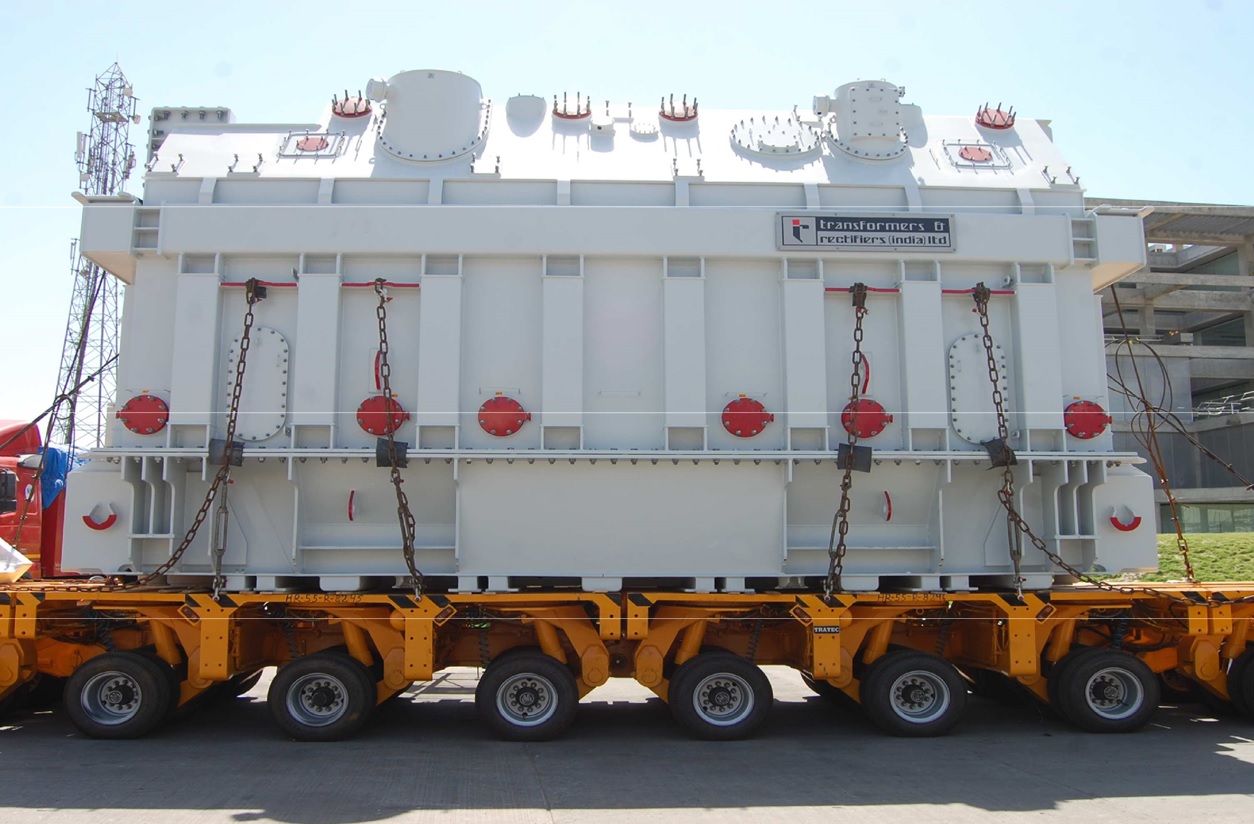
Transformers and Rectifiers India Ltd – A High voltage pick

Winner of the best equipment supplier award from GETCO (Gujarat Energy Transmission Corporation Ltd) for the last 4 years, recipient of the most valuable customer award by Central Power Research Institute and the Forbes Asia`s 200 best under a billion award in 2010.

TRIL (Transformers and Rectifiers India Ltd) has installed over 7000 transformers (power, distribution, furnace and rectifier transformers) till date and has the capability to manufacture up to 1000 kVA transformers.

The company has 3 manufacturing facilities in Odhav, Changodar and Moraiya, all in Gujarat. The company came out with its IPO in the year 2008 to raise funds for its Moraiya facility. Moraiya is a state of the art facility with an annual capacity of 16,000 MVA and the capability to test and manufacture 765 kV class transformers.

An Elite Group

While the research available on the Indian transformer industry is nebulous, it is likely that TRIL is a part of an elite group of companies that have the capability to produce EHV (extra high voltage) transformers. The domestic players with this capability include Vijai Electricals, Crompton Greaves and BHEL while Alstom, Siemens and ABB are the international players with Indian manufacturing having the same capability.

http://www.business-standard.com/article/companies/transformers-and-rectifiers-sets-up-rs-100-cr-mfg-facility-109053000045_1.html

http://www.electricalmonitor.com/ArticleDetails.aspx?aid=1608&sid=7

Tie ups with ZTR and PGCIL

TRIL has tied up with a Ukrainian company, ZTR (Zaporozhtransformator), to manufacture EHV transformers and has a MOU with Power Grid Corporation of India (PGCIL) to develop 1200 MVA transformers.

http://ztr.com.ua/en/news?n_id=183

The tie up with ZTR does not seem to be an exclusive one since ZTR is simultaneously working with Crompton Greaves Ltd in the transformer segment.

http://www.ztr.com.ua/en/news?n_id=282

http://www.moneycontrol.com/news/announcements/tr-commissions-3-units-formingbank1500-mva-765-kv-transformers-at-nellore_1053364.html

3 of the 20 nos of 765 kV class transformers have been successfully tested and commissioned at Power Grid`s Nellore sub-station. This was a part of the Rs 204 Crs order that the company received from PGCIL to supply 10,000 MVA worth of 765 kV class transformers (20 nos of 500 MVA each).

India Transformer Manufacturing Capacity

http://www.electricalmonitor.com/ArticleDetails.aspx?aid=1608&sid=7

As per the above article

” Transformer manufacturing capacity in India stands at ~370 GVA with capacity utilization rates hovering around 60-70 per cent on an average over the last five years”

TRIL has an installed capacity of 23,200 MVA and for the year 2013-14, has been able to achieve its highest ever production of 20,650 MVA.

http://www.moneycontrol.com/stocks/stock_market/corp_notices.php?autono=785799

This would mean that TRIL has been able to achieve a 90% capacity utilization, far higher than the industry norm. While it is very much possible that the main reason for this achievement is the 10,000 MVA Power Grid, which was obtained at wafer thin margins, nonetheless, this is a significant achievement at a time when order growth in the power sector has been sluggish.

Promoter Profile and Shareholding

The Mamotra family, led by Mr Jitendra Mamotra, who has more than 40 years of experience in the transformer industry, has been running the company since 1981. Their current shareholding stands at 75%. For FY 2012-13, the Mamotra family took home a salary of Rs 1.2 Crs.

Mr Jitendra Mamotra is the company`s CMD and mascot. Some links with his interviews and views about the Indian transformer industry are below

http://articles.economictimes.indiatimes.com/2011-10-08/news/30258161_1_jitendra-mamtora-transformers-rectifiers-mva

http://www.electricalmonitor.com/6thanniversary/EM_January%202012%20(6th%20Anniversary)00032.html

Financials and Valuation Rationale

With total debt of just Rs 100 Crs, market cap of Rs 250 Crs, the company trades at a puny enterprise value of Rs 350 Crs. Moreover, the company is sitting on a working capital of Rs 270 Crs, making it a net-net (working capital>market cap). With accounts receivables at Rs 230 Crs, the only concern is that a high proportion (most likely greater than 60%) of these receivables will be from State Electricity Boards which are sitting on huge debts and have a poor record of paying vendors on-time.

For the sake of comparison, Voltamp Transformer, a profit making transformer manufacturer with revenues very similar to TRIL (both are at around Rs 550 Crs)  minus the extra high voltage capability of TRIL trades at Rs 740 Crs and a P/BV of 1.7x (TRIL trades at a P/BV of 0.7).

Vijai Electricals, a Hyderabad based company, with the capability to produce 1200 kV EHV transformers, has just been acquired by Toshiba for Rs 1300 Crs, in spite of the fact that the company is mired in Corporate Debt Restructuring (CDR) of Rs 1000 Crs and has a total debt exposure of Rs 2200 Crs.

http://www.vccircle.com/news/engineering/2013/09/10/3i-backed-vijai-electricals-sell-bulk-td-business-toshiba-200m

Click to access 032412_02.pdf

Since Vijai Electricals is not publicly listed, it is harder to obtain the required financial data. We can conservatively estimate the company`s revenues to be around Rs 1500-2000 Crs.

http://www.business-standard.com/article/companies/vijai-electricals-setting-up-plant-in-mexico-111071800009_1.html

When compared to its peers, TRIL`s market cap of Rs 250 Crs seems insignificant for a company that can produce 765 kV transformers.

The company came out with its IPO in 2008 at a price band of Rs 420-465. The current market price is Rs 188/share, a substantial discount from IPO levels.

Chinese Threat

The Chinese dragon poses the biggest threat to Indian transformer manufacturers.

http://www.business-standard.com/article/companies/indian-transformer-makers-may-face-chinese-competition-111072800017_1.html

As per the above article

“Chinese companies are posing a major threat for Indian companies. Chinese players have lower production cost. Also, the top three transformers makers in China hold a combined manufacturing capacity of about 350,000 MVA, more than the India’s total capacity”

http://www.thehindubusinessline.com/industry-and-economy/power-gear-orders-pick-up-but-competition-hits-players/article3439569.ece

“In the transformer space, it appeared that the Chinese were less aggressive for a good part of FY-12. But they more than made up for their absence in the last quarter, bagging close to 40 per cent of the transformer orders awarded by PGCIL. Interestingly, the Chinese went for the kill in the high-end (also higher-margin) 765-KV transformer space.”

BUY Recommendation

Inspite of the problems associated with Chinese competition and uncollected receivables from discoms, TRIL is a real multi-bagger. The company has reported revenues of Rs 515 Crs and a near loss bottomline, TRIL`s performance has virtually bottomed out. With the new government at the center expected to improve the prospects of the power sector and PGCIL expected to come out with large orders for EHV transformers, TRIL can easily reach 100% capacity utilization levels and double revenues in the next 2-3 years. Rs 1000 Crs of expected revenue and 10% expected PAT margins, the company can expect a P/E valuation of 15x, taking its market cap to Rs 1500 Crs, a 6 fold increase from current valuations.

Disclosure : I hold stake in TRIL bought at Rs 250/share (after bonus issue) and will be adding more at current levels

765

Seamec Update

http://www.business-standard.com/article/news-cm/seamec-jumps-as-vessel-to-secure-work-114040700547_1.html

The news has finally come

http://articles.economictimes.indiatimes.com/2014-04-04/news/48866922_1_seamec-multi-support-vessels-technip

As per Economic Times

” SEAMAC’s current market capitalization is Rs 313 crore, or 3.1 times expected earnings for FY15 and 0.66 times its price-to-book value, which leaves scope for an upside “

Current market cap is more than Rs 380 Crs. But if FY 15 earnings are expected to be Rs 100 Crs, then the market cap can move up by 1.5 times, on a conservative basis.